There is a very specific brand of dark, existential comedy that only modern aviation can deliver: sitting in Economy Saver at 36,000 feet, buttering a warm dinner roll with a plastic knife, while the live television screen bolted to the seat in front of you cheerfully diagrams why the exact patch of sky you are currently occupying is about to become the epicenter of World War III.
On Friday, February 27, 2026, I boarded Emirates Flight EK-181 from Dubai International (DXB) back home to Brussels Airport (BRU). Looking back just forty-eight hours later on this first day of March, it turns out our Boeing 777-300ER was among the last regular commercial rotations to thread the needle straight up the Persian Gulf and the Strait of Hormuz before geopolitical chaos—let’s call it the Trumpocalypse—slammed the regional airspace shut.
Here is the field report from 36,000 feet: how to survive a 7-hour-and-20-minute non-stop flight when your inflight entertainment map and the Pentagon’s target map are literally the same picture.
1. The Calm Before the NOTAM (Dubai, Feb 25–26)
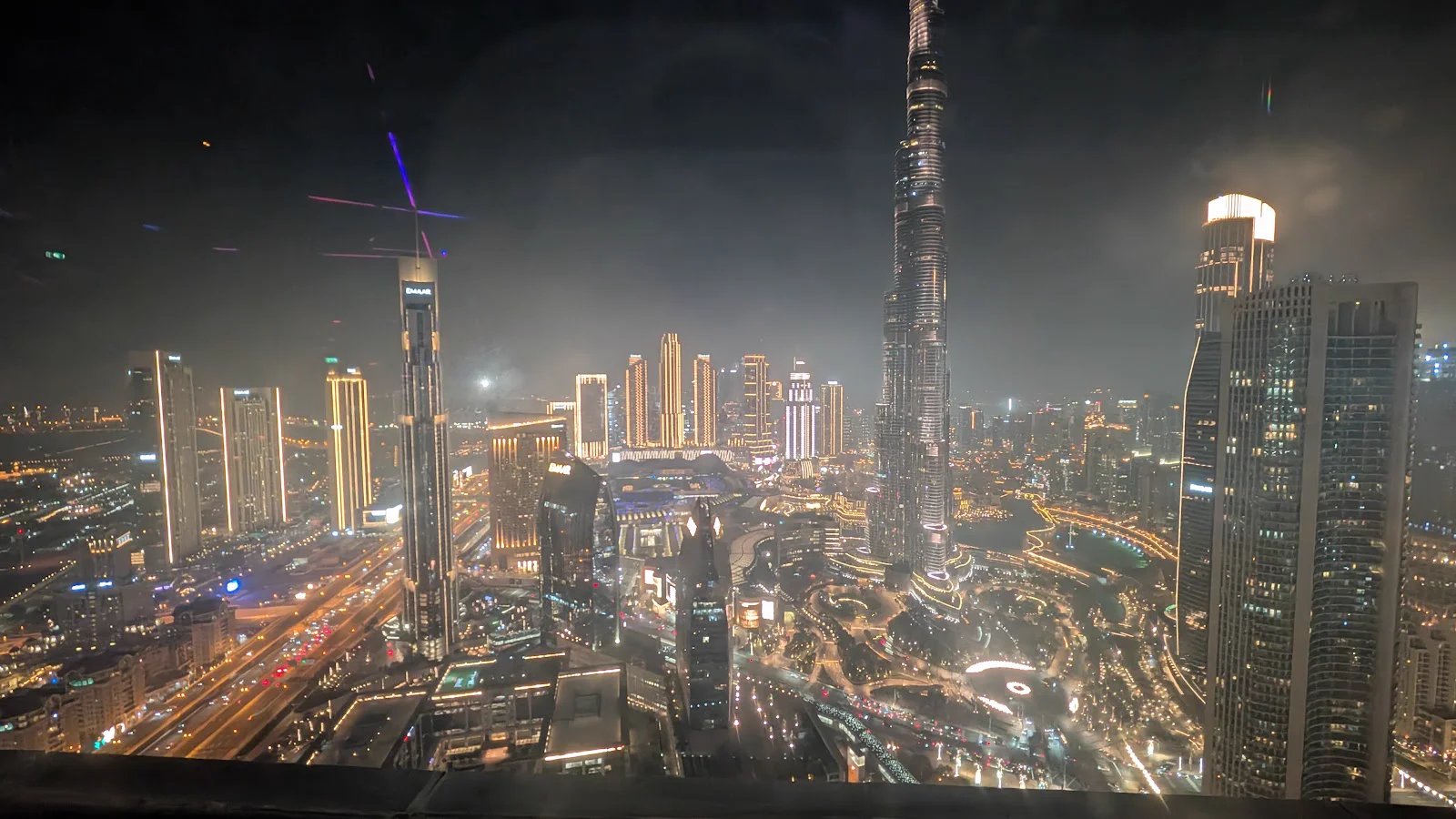
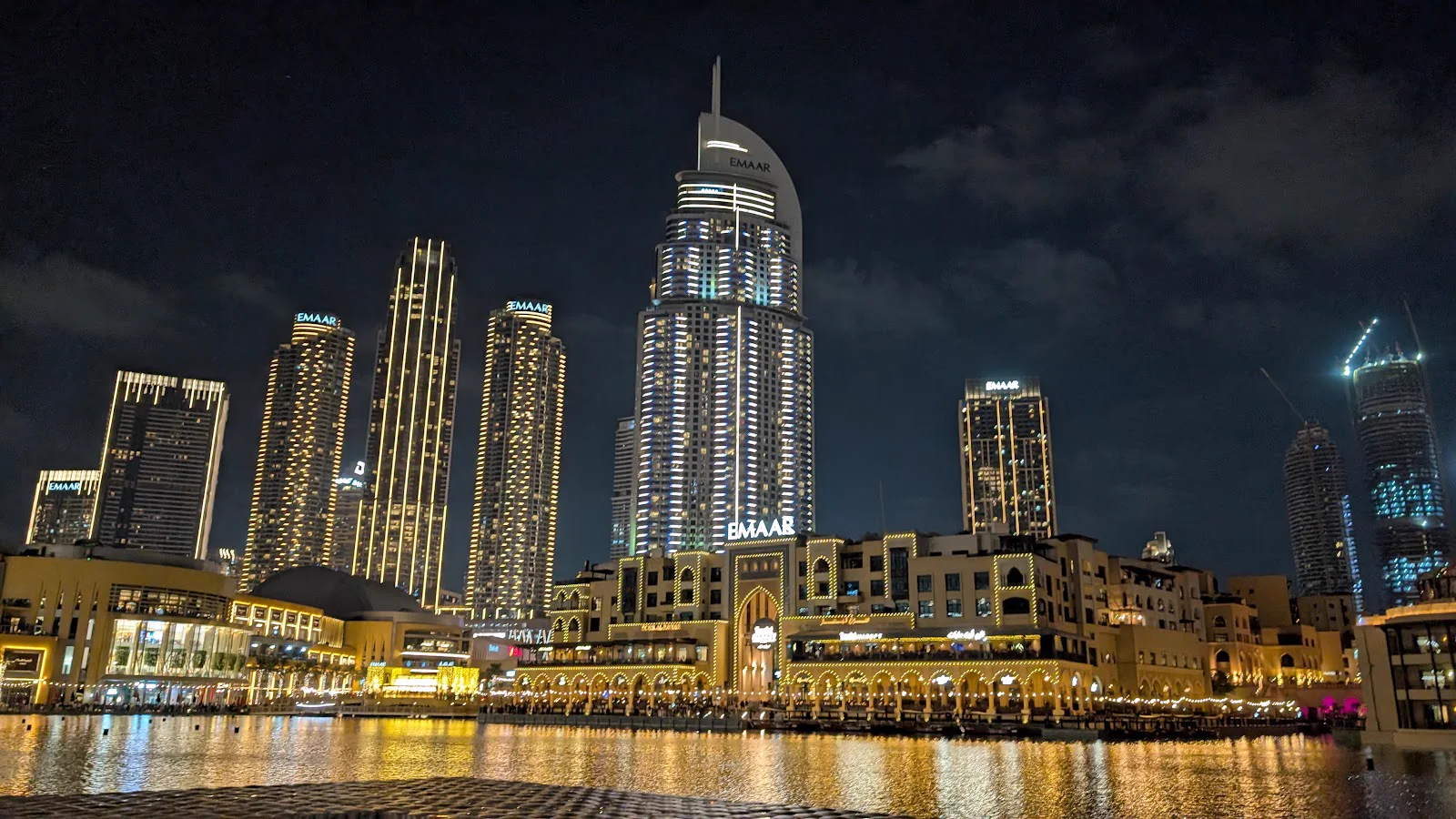
For the first forty-eight hours of the trip, Dubai was doing what Dubai does best: looking like a post-scarcity sci-fi movie set under 28°C sunshine. Between evening walks under the glittering spire of the Burj Khalifa and daytime stops past the Museum of the Future and Emirates Towers, life on the ground felt completely insulated from global reality.
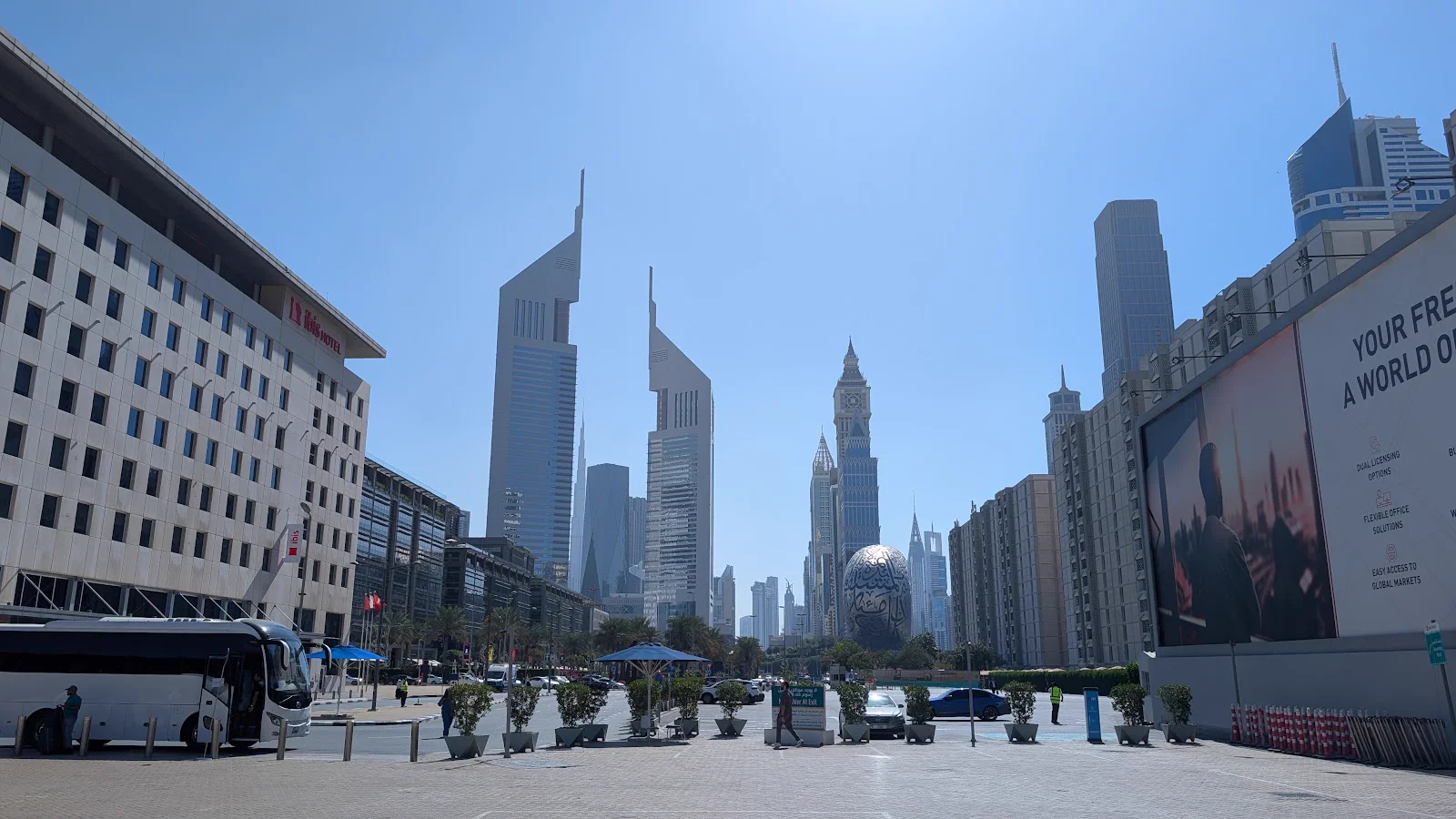
Except, of course, if you looked at your smartphone.
By Thursday evening, news push notifications were vibrating like an over-caffeinated Geiger counter. Carrier strike groups were converging on the Gulf of Oman, emergency CENTCOM briefings were being called in Washington, and aviation geek forums were refreshing waiting for the dreaded five-letter acronym: NOTAM (Notice to Air Missions—pilot slang for “do not fly through this polygon unless you want to test your chaff dispensers”).
Pro-Tip for Frequent Flyers: When marine war-risk insurance underwriters and Flightradar24 OSINT accounts start tweeting about the exact flight corridor your return ticket crosses tomorrow afternoon, do not buy the extra-large duty-free Toblerone. Keep your carry-on light enough to sprint.
2. Friday, Feb 27, 13:22 GST: The Gate F17 Sweat Test
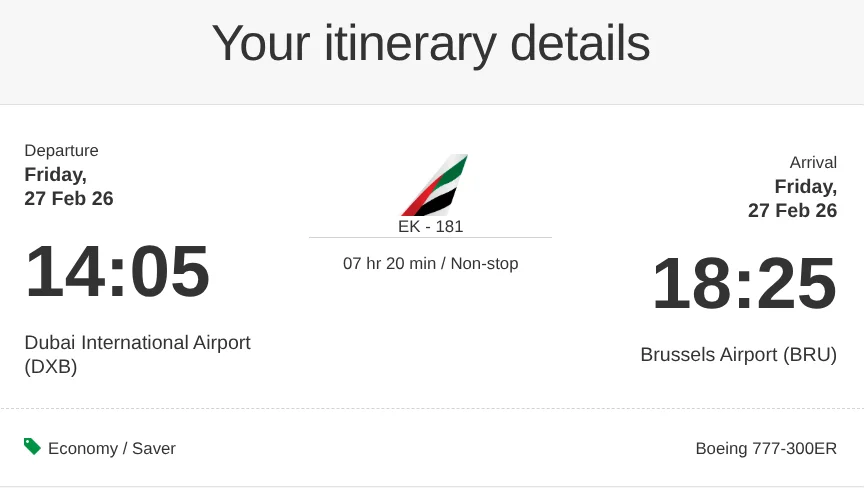
On Friday morning, I checked the itinerary one last time:
- Flight: Emirates EK-181 (Non-stop Dubai DXB $\rightarrow$ Brussels BRU)
-
Departure: 14:05 GST Arrival: 18:25 CET - Equipment: Boeing 777-300ER (
A6-ENB) - Fare Class: Economy / Saver (because nothing says “high-stakes geopolitical extraction” like earning 50% Skywards miles)
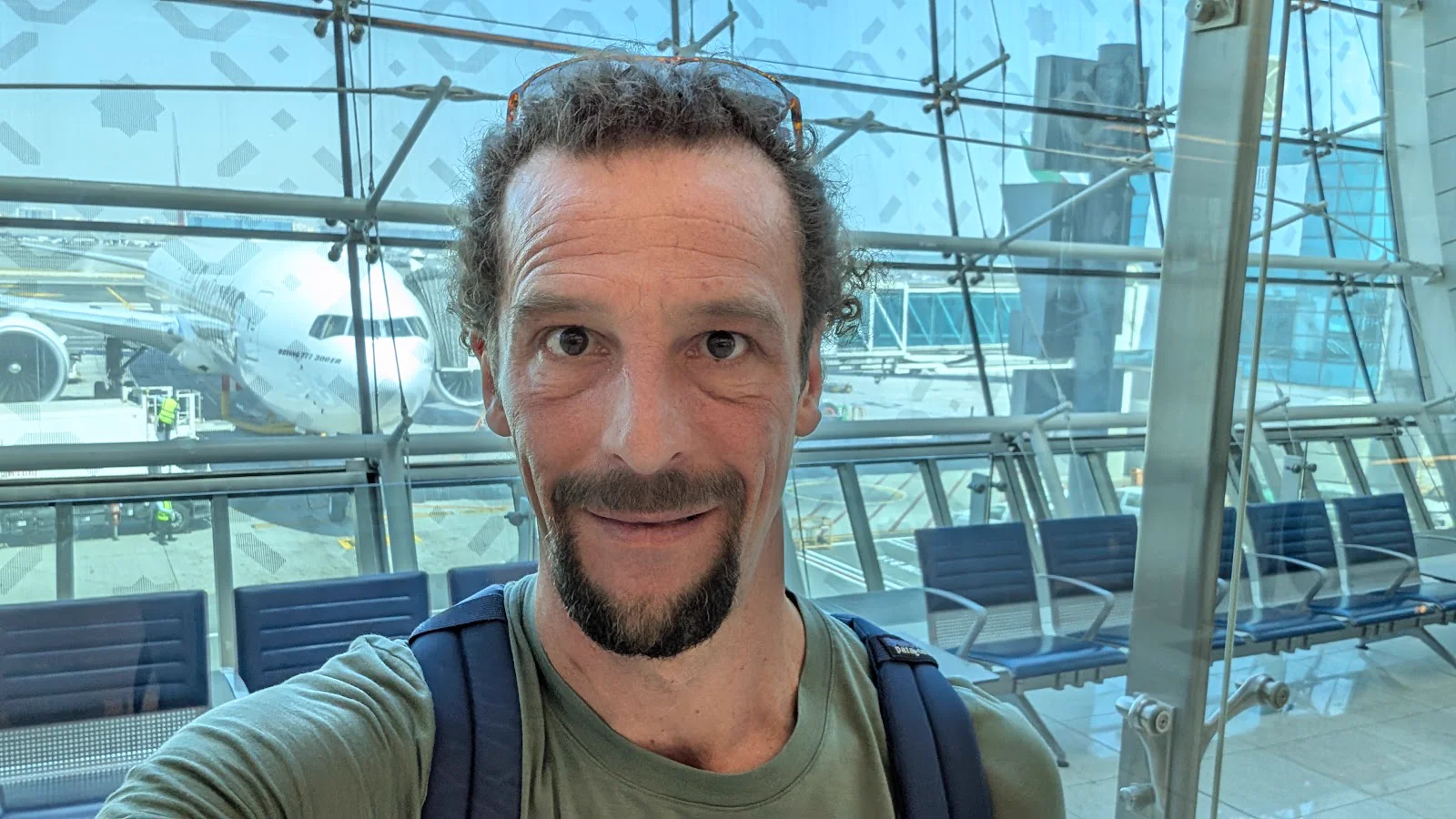
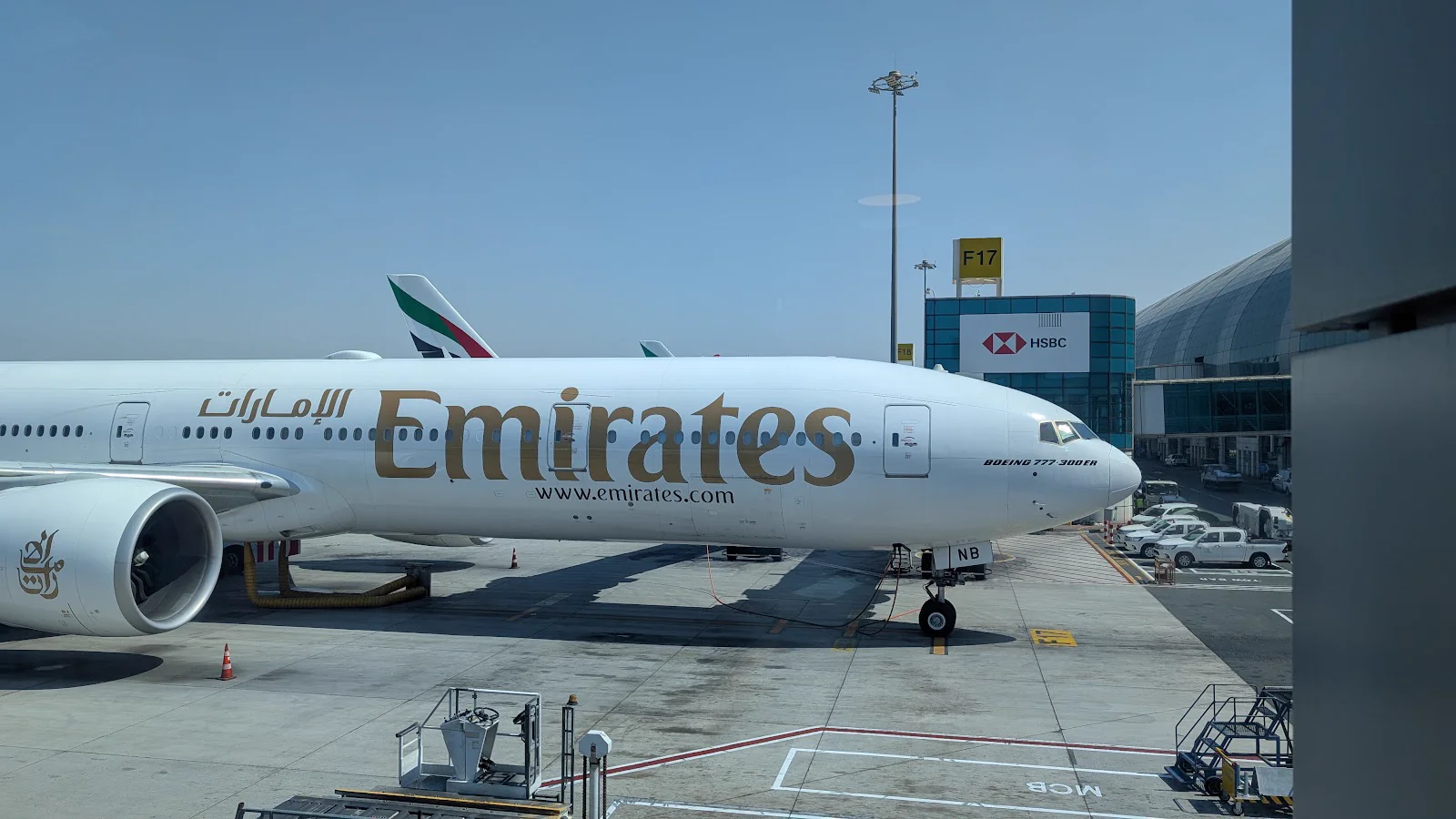
Standing at Gate F17 at 13:22 GST with A6-ENB parked right behind the glass, I snapped the mandatory pre-boarding selfie above. That wide-eyed expression isn’t jetlag—that is the exact face of a Brusseleir doing mental math: “If they close the Strait of Hormuz corridor at 14:10, do we divert to Muscat, do we fly a 14-hour loop around the horn of Africa, or am I about to live in Terminal 3 like Tom Hanks for the next six months?”
At 13:55, the boarding doors clicked shut. At 14:05 on the dot, the twin GE90 engines spooled up with their signature bass roar, and we rocketed off Runway 30R into the hazy Gulf afternoon. Hurdle number one: cleared.
3. Threading the Needle at Mach 0.841
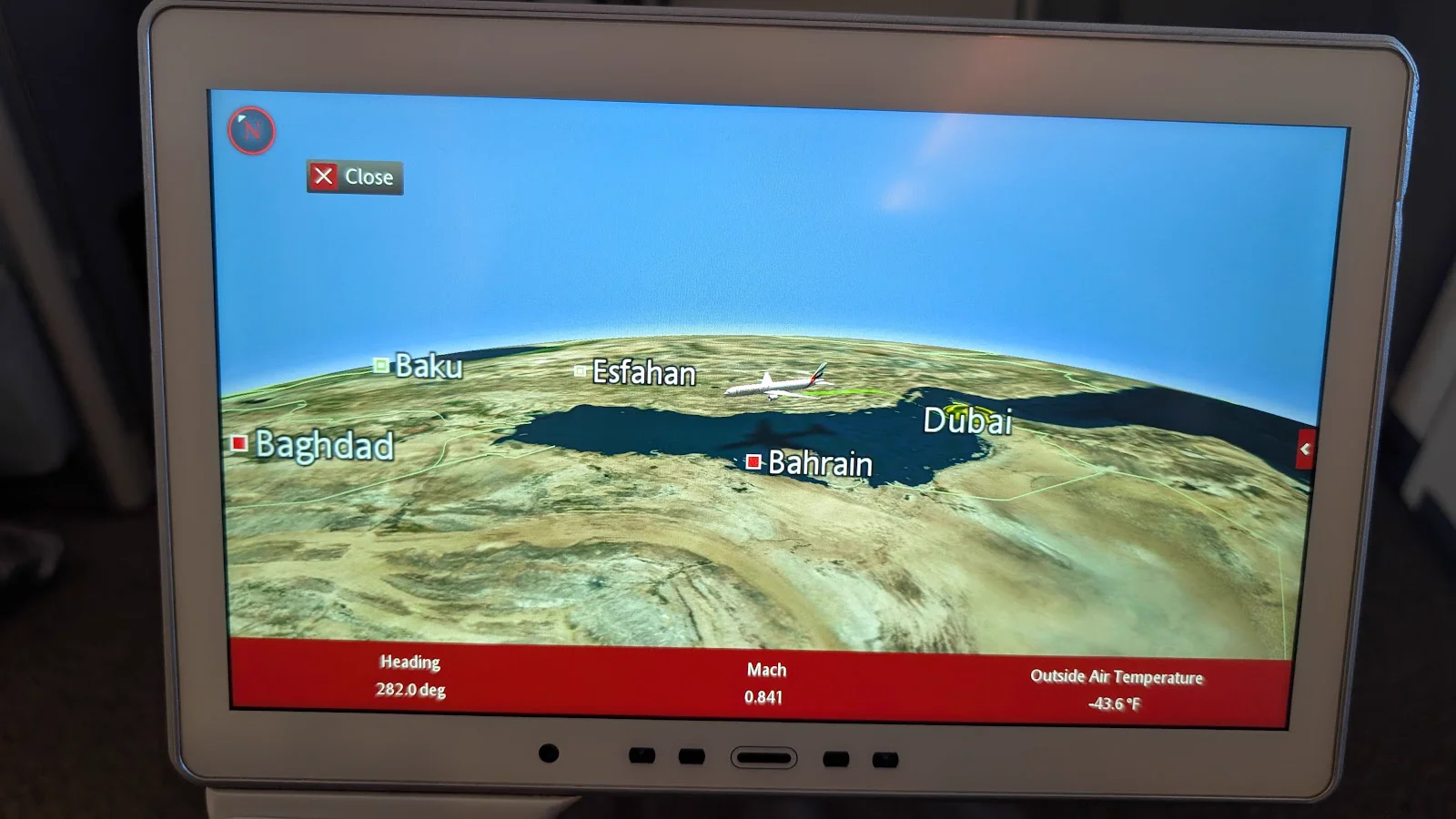
An hour after takeoff (15:05 GST / 11:05 UTC), we leveled off at cruising altitude:
- Heading:
282.0 deg(West-Northwest) - Speed:
Mach 0.841 - Outside Air Temperature:
-43.6 °F(-42 °C)
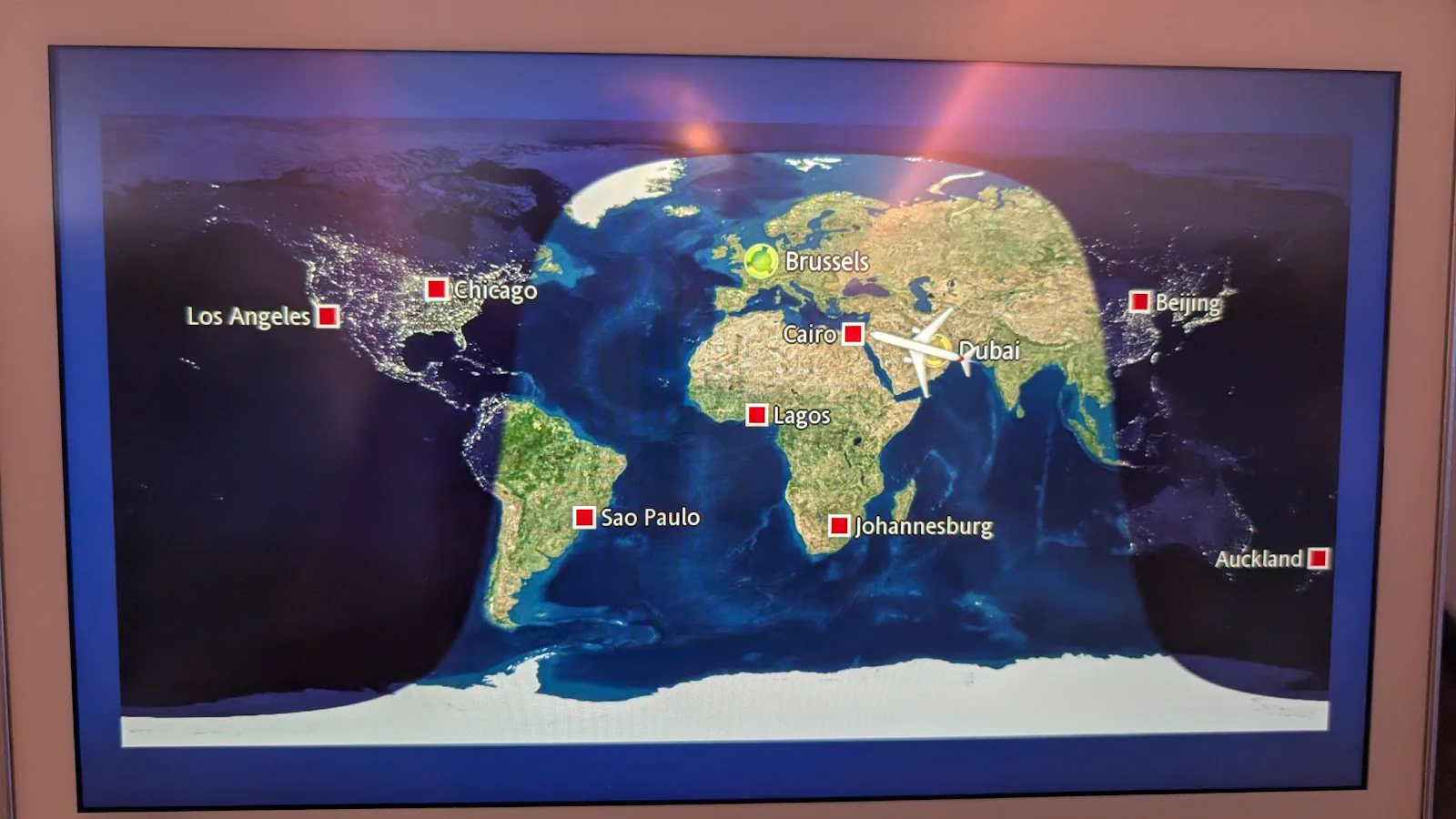
On a normal Friday, the Emirates ICE inflight map is a relaxing screensaver you put on while waiting for the beverage cart. On this Friday, watching our little white Boeing 777 icon creep across the screen felt like playing a live-action game of Minesweeper.
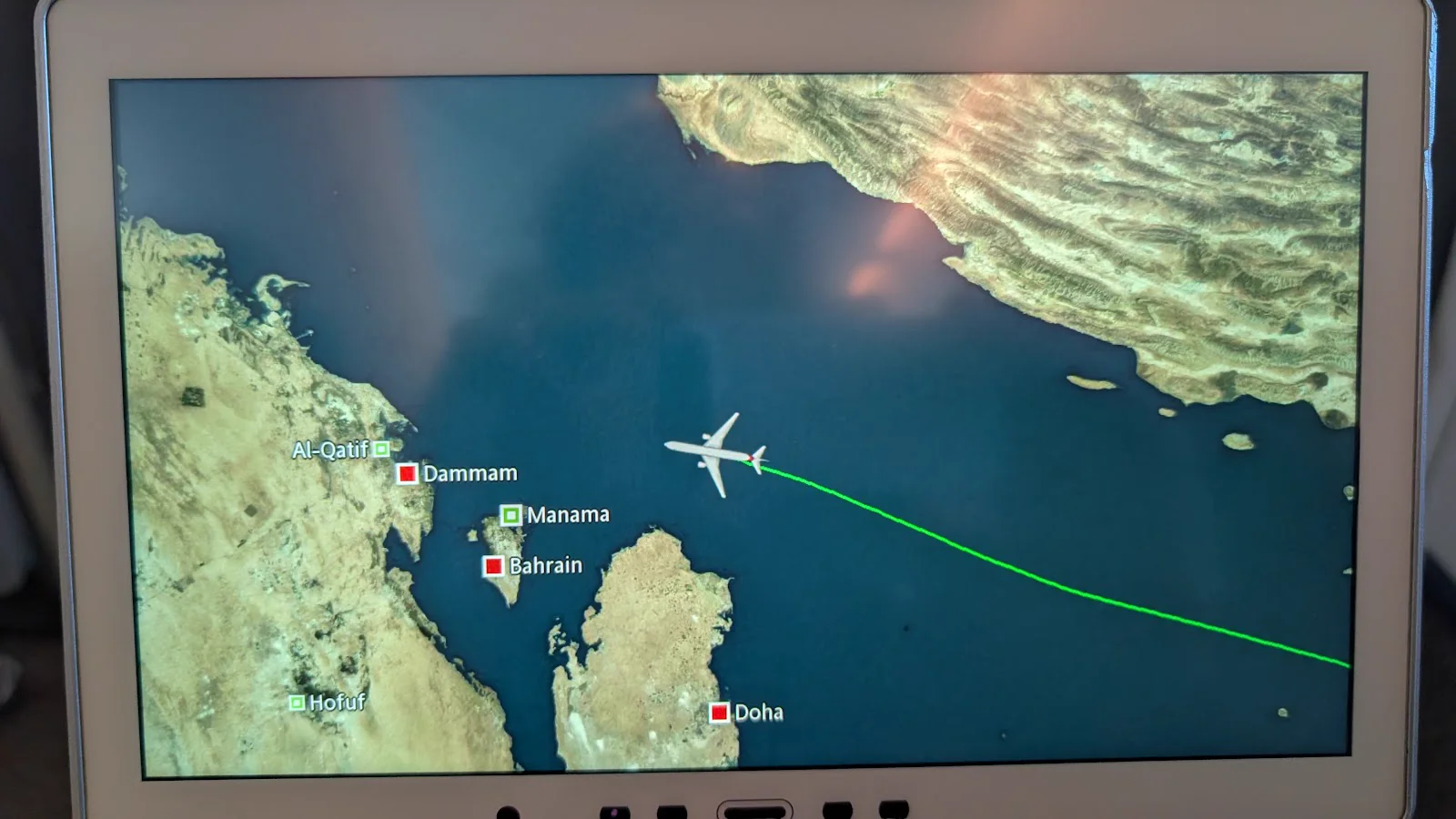
Look at that green flight trajectory above. To get from Dubai to Brussels in 7 hours and 20 minutes without burning an extra 30 tons of Jet A-1 fuel, the standard airway shoots straight up the spine of the Persian Gulf—squeezing neatly between Doha, Bahrain, and Dammam to port, and the Iranian coastline and Zagros mountains to starboard, with the Esfahan label floating peacefully on the horizon.
Looking out the actual cabin window, the view was deceptively serene: turquoise water, desert islands, and tiny supertankers leaving white wakes across the Strait. “See?” I told myself, taking a sip of ginger ale. “People on Twitter always overreact.”
Then I made the mistake of pressing the Live TV button on the seatback screen.
4. Peak Inflight Entertainment: Watching CNN Live Over the Target Map
At 16:44 GST, while our Boeing 777 was still transiting the northern reaches of the Gulf corridor, I flipped over to CNN International Live.
Here is what greeted me on my 13-inch HD seatback monitor:
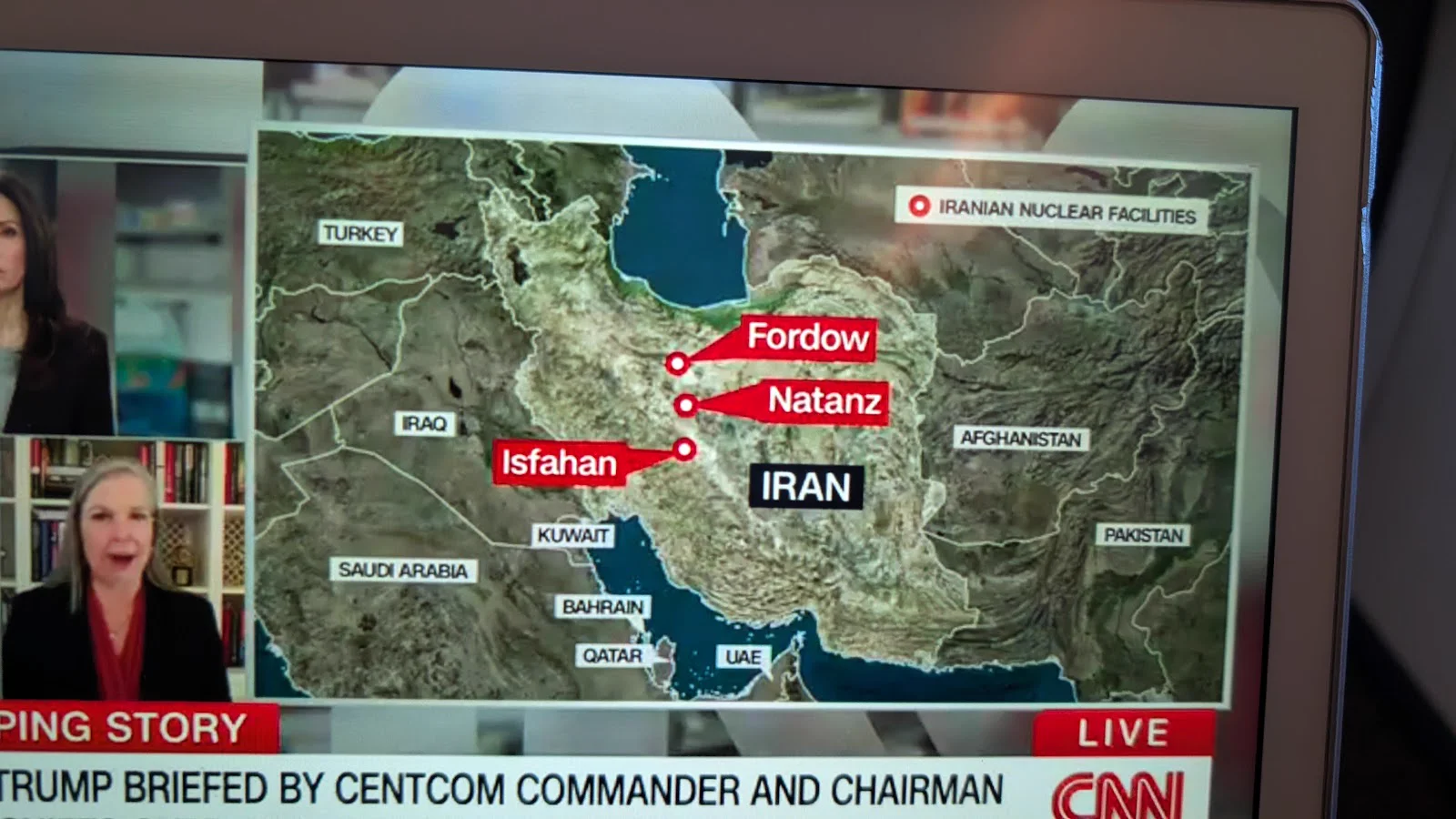
DEVELOPING STORY | LIVE CNN
TRUMP BRIEFED BY CENTCOM COMMANDER AND CHAIRMAN
[Giant satellite map of Iran highlighting red target markers over Fordow, Natanz, and Isfahan]
I blinked. I looked at the red pin labeled Isfahan on CNN. I tapped the screen back to the Emirates 3D flight tracker, where the city label Esfahan was still sitting right off our starboard wing. I tapped back to CNN.
And then, as if the television producer wanted to make sure Seat 34K got maximum value for his Economy Saver ticket, CNN cut to Graphic #2:
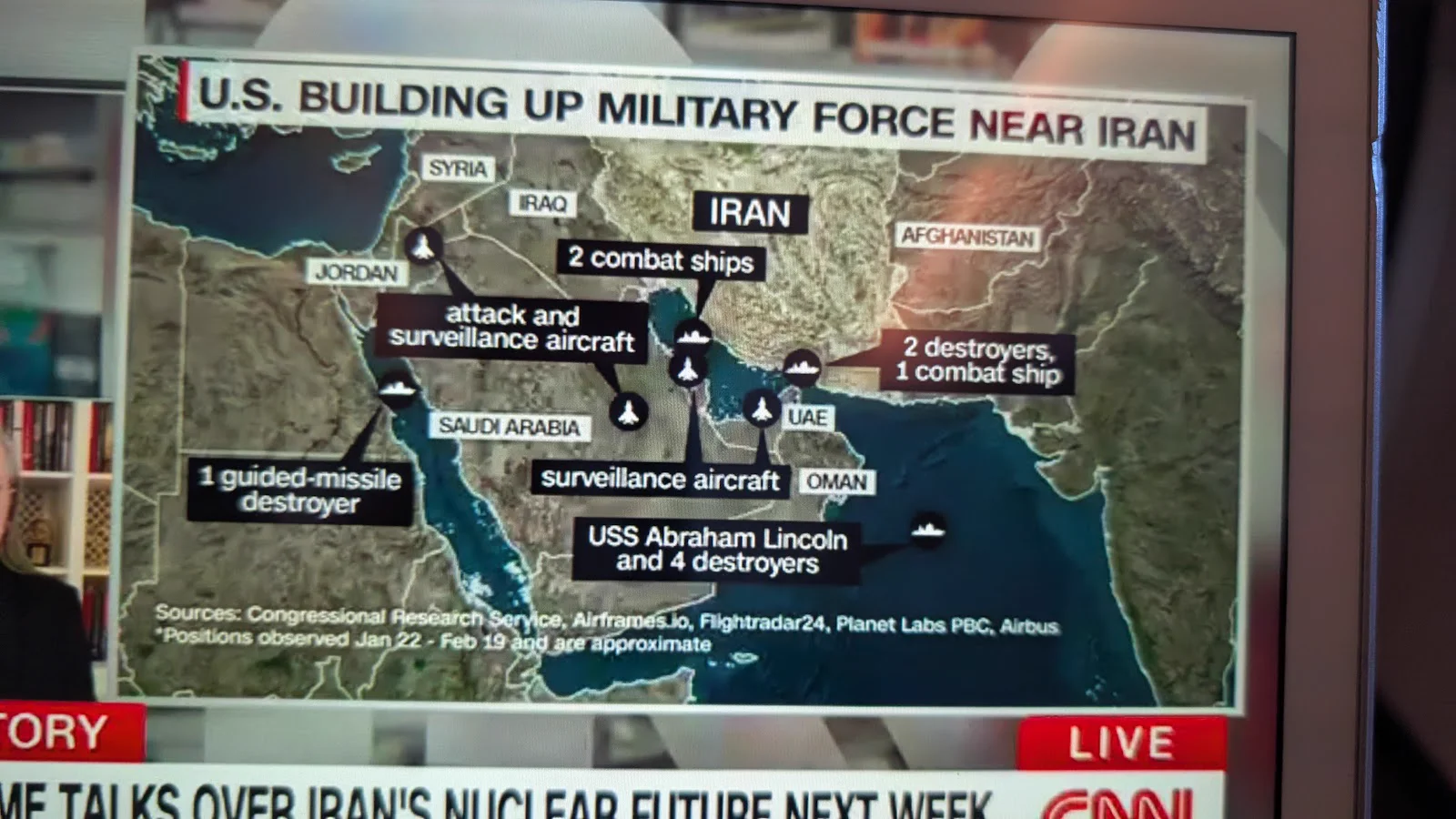
U.S. BUILDING UP MILITARY FORCE NEAR IRAN
- USS Abraham Lincoln and 4 destroyers (Gulf of Oman)
- 2 destroyers, 1 combat ship (Strait of Hormuz)
- Attack and surveillance aircraft + 2 combat ships (Persian Gulf — literally the exact pixel where EK-181 was flying)
Let me tell you: nothing sharpens your situational awareness quite like watching a cable news anchor use a laser pointer to circle your current GPS coordinates as a “high-probability kinetic flashpoint.”
Every time the Triple Seven encountered a completely normal ripple of clear-air turbulence over the mountains, you could see half the passengers subtly pausing their movies, lifting their window shades two inches, and peering outside to check whether that bump was a thermal updraft or an F-35 doing aersonic barrel roll off the wingtip.
5. Touchdown at Zaventem: Indiana Jones Style
Fortunately for all 350 of us on board, commercial aviation dispatchers know exactly when to hold ‘em and when to fold ‘em. EK-181 kept its nose pointed at 282 degrees, climbed smoothly over Eastern Turkey and the Black Sea, and left the Middle Eastern radar sectors behind just as the diplomatic temperature hit boiling point.
At 18:25 CET, our main landing gear kissed the wet, grey asphalt of Brussels Airport (BRU). Outside: 8°C drizzle, low Flemish clouds, and the comforting aroma of lukewarm airport waffles. I have never been happier to see Zaventem rain in my entire life.
Sure enough, within hours of those final late-February rotations, the airspace advisories cascaded across the region, insurance premiums spiked, and commercial flight paths between Europe and Asia turned into giant detour loops over the Red Sea and Saudi desert. We didn’t just catch a Friday flight home—we rolled under the stone door Indiana Jones-style right before it hit the floor.
Photo & Evidence Carousel: Flight EK-181 (DXB → BRU)
Click through all 11 photos and live seatback captures from the Dubai trip and the flight over Hormuz below: